
30-sec preview
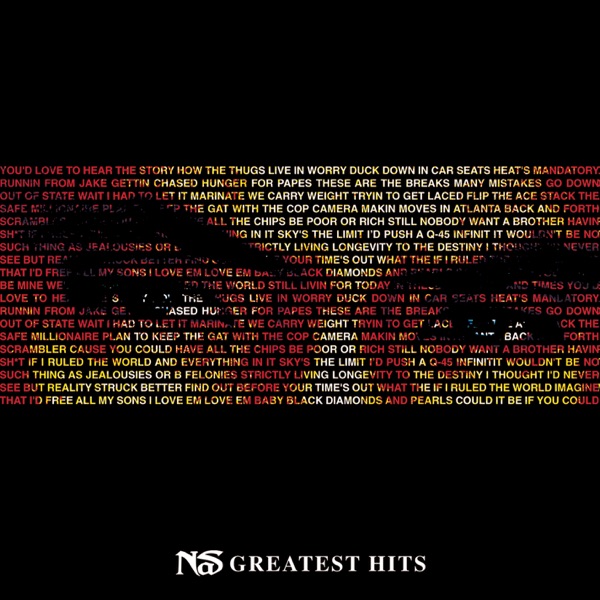
2004 · From the album Greatest Hits
Bridging the Gap (feat. Olu Dara)
by Nas
The reading
A father-son duet that traces a single Black musical bloodline from Mississippi blues through jazz to Queensbridge rap
02 · Interpretation
Bridging the Gap: Nas, Olu Dara, and a Family Tree of Black Music
The premise is in the title. Nas and his father, the cornetist and bluesman Olu Dara, sit down together to draw a straight line from Mississippi juke joints to Queensbridge project benches, and to argue that rap is not a break from older Black music but its continuation.
Released in October 2004 on the compilation 'Greatest Hits,' the track is built around a loop of Muddy Waters' 'Mannish Boy,' which is itself the point: a Chicago blues riff becomes the bed for a New York rap song, and a father who played that kind of music shows up to bless the transaction. The closing dedication, 'Rest In Peace Ray Charles,' places the song firmly in the summer Charles died, which gives its lineage talk added weight.
Olu Dara sings the hook in a loose, conversational drawl, telling his own story in the third person: he came from Mississippi, drifted to New York, had a son he named Nasir, and told the boy he would be the greatest man alive. It is unusual to hear a rap chorus delivered as a father's brag about his child, and the warmth of it sets the tone for everything Nas does in the verses.
The first verse: inheritance as craft
Nas opens by claiming a kind of founder status, calling himself the 'Chuck Berry of these rap skits,' then immediately gives the credit back to his father. The lesson he says he learned at home, to be his own boss and 'keep integrity at every cost,' is framed as a Natchez, Mississippi inheritance. When he name-checks Miles Davis and Dizzy Gillespie and then declares he is 'bridging the gap, from the blues, to jazz, to rap,' he is laying out the song's actual thesis in one bar.
The Prince reference, digging through boxes of 'Purple Rain,' reframes Queensbridge ('The Bridge, home of the Superkids') as his own Minneapolis, the local scene that raised him. He acknowledges the alternative outcome in passing: some neighborhood peers are 'doin' bids,' and without his father's intervention, he might have been one of them.
The second verse: schooling and self-schooling
The second verse takes the lineage argument and runs it backward. 'The blues came from gospel, gospel from blues,' he sings, locating the source in enslaved people harmonizing. From there he tells a compressed origin story: graffiti on walls, a near-miss with Spofford juvenile detention, a father who handed him Malcolm X instead. The detail about being labeled dyslexic while secretly out-reading the curriculum, and getting sent home for writing 'mad poems,' is the song's neatest joke on the school system; the kid they couldn't teach was already an artist.
Olu Dara's verse
When the father finally takes the mic, the song's argument becomes literal. His opening line revises a famous Temptations song: 'My Poppa was not a Rollin' Stone,' he insists, he 'been around the world blowin' his horn, still he came home.' That correction matters. A genre often accused of absent fathers gives its own father the verse. He lists Saudi Arabia, Mozambique, Madagascar, Paris, Greece, and then lands the punchline: the real 'Middle Africa' is Queensbridge. The shout-outs to Muddy Waters and Howlin' Wolf at the end are not decoration; they are the grandfathers being introduced to complete the family portrait.
Why it endures
Most rap songs about fathers are about absence. 'Bridging the Gap' is about presence, and specifically about a presence that hands down a craft. It works because both men sound like themselves, because the Muddy Waters loop is doing the song's thematic work underneath the vocals, and because Nas, often accused of being a museum-piece traditionalist, here turns that instinct into a virtue. The song is his clearest statement of where he thinks he comes from, musically and otherwise.
Themes catalogued
03 · Lyrics
"Bridging the Gap (feat. Olu Dara)"
The light is there
See I come from Mississippi
I was young and runnin' wild
Ended up in New York City, where I had my first child
I named the boy Nasir, all the boys call him Nas
I told him as a youngster, he'll be the greatest man alive
Let's go!
Hey-Hey-Hey-Hey-
Chuck Berry of these rap skits, styles I mastered
Many brothers snatched it up and tried to match it
But I'm still number one, everyday real
Speak what I want, I don't care what y'all feel
Cause I'm my own master, my Pop told me be your own boss
Keep integrity at every cost, and his home was Natchez Mississippi
Did it like Miles and Dizzy, now we gettin' busy
Bridging the gap, from the blues, to jazz, to rap
The history of music on this track
Born in the game, discovered my father's music
Like Prince searchin' through boxes of Purple Rain
But my Minneapolis was The Bridge, home of the Superkids
Some are well-known, some doin' bids
I mighta ended up on the wrong side of the tracks
If Pops wouldn't've pulled me back an said yo
See I come from Mississippi
I was young and runnin' wild
Ended up in New York City, where I had my first child
I named the boy Nasir, all the boys call him Nas
I told him as a youngster, he'll be the greatest man alive
Greatest man alive (Yeah, turn it up!)
Gre-Gre-Gre-Gre-Greatest man alive!
The blues came from gospel, gospel from blues
Slaves are harmonizin' them ah's and ooh's
Old school, new school, know school rules
All these years I been voicin' my blues
I'm a artist from the start, Hip-Hop guided my heart
Graffiti on the wall, coulda ended in Spoffard, juvenile delinquent
But Pops gave me the right type'a tools to think with
Books to read, like X and stuff
Cause the schools said the kids had dyslexia
In art class I was a compulsive sketcher of
Teachers in my homeroom, I drew pix to mess them up
Cause none'a them would like my style
Read more books than the curriculum profile
Said, Mr. Jones please come get your child
Cause he's writin' mad poems and his verses are wild
I was born in Mississippi
I was young and runnin' wild
Moved to New York City, where I had my first child
I named the boy Nasir, all the boys call him Nas
I told him as a youngster, he'll be the greatest man alive
Greatest man - The great-greatest man alive
Hey-Hey-Hey -- My Poppa was not a Rollin' Stone
He been around the world blowin' his horn, still he came home
Then he got grown, changed his name to Olu
Come on, tell 'em 'bout the places you gone to
I been to Saudi Arabia, Mozambique
Madagascar, Paris, Greece
The Middle Africa is where we lived
Better known as Queenbridge
Nas, Nas you don't stop
Olu Dara in the house, you don't stop
Muddy Waters' Howling Wolf you don't stop
From the Blues to Street Hop you don't stop
Tell 'em Pop
See I come from Mississippi (Let 'em know)
I was young and runnin' wild (Runnin' wild)
Ended up in New York City (Yeah!)
Where I had my first child (That's me)
I named the boy Nasir (Yeah, Daddy!)
All the boys call him Nas (Luh ya, boy)
I told him as a youngster
He'll be the greatest man alive (You the greatest, Pop)
Greatest man alive (You the greatest, Pop)
Gre-Gre-Gre-Gre-Greatest man alive!
Rest In Peace Ray Charles
Lyrics via Google. Copyright belongs to rights holders.
04 · FAQ


