
30-sec preview
2026 · From the album ddok ddok ddok - Single
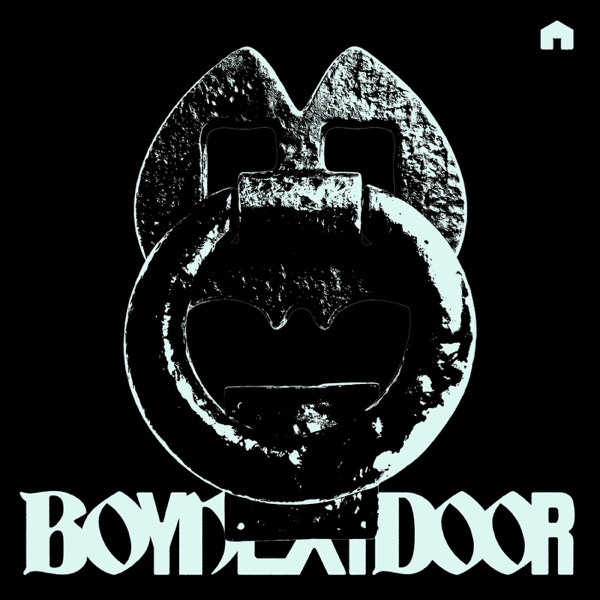
ddok ddok ddok
by BOYNEXTDOOR
The reading
A bratty, multilingual arrival anthem in which BOYNEXTDOOR knocks on listeners' doors to announce themselves as the year's most confident uninvited guests
02 · Interpretation
Knock, Knock, Knock: BOYNEXTDOOR's Door-Busting Arrival Anthem
The song is built on a single image: three boys (well, six) knocking at your door, refusing to leave until you open it. 'Ddok ddok ddok' is the Korean onomatopoeia for a knock, and BOYNEXTDOOR stretches that small domestic sound into a full-length thesis on presence, confidence, and showing up uninvited.
Released in May 2026, the track lands in a K-pop moment crowded with fourth-generation boy groups all jostling for attention. BOYNEXTDOOR's response is to lean into the literal meaning of their name. If you are the boy next door, the natural move is to walk over and knock. The song takes that premise and pushes it toward something more aggressive than neighborly.
The premise: an arrival, not a request
The hook lays out the scene with almost no metaphor. 'B-N-D comin' at your door,' a count of one, two, three, and a promise to 'blow.' The group has come 'all the way to bust down,' which positions the knock less as politeness than as a warning before forced entry. The repeated 'RSVP' is the joke: they are demanding a response to an invitation they never sent, having arrived 'out of the blue' at your front gate.
The pre-chorus tightens that idea. They are trying to cross a threshold ('턱을 넘어가려 해'), and in the second pass the line escalates to crossing a line ('선을 넘어가려'), a small lyric swap that signals the group is willing to break decorum to get in.
The verses: surveillance flipped
The verses pivot from the doorstep to a sharper, more watchful mode. The members describe stalking with no time to breathe, clapping back quickly, stacking high, locking sight on the sky. The lyric 'Scrollin' up high, 마치 blind, you gon' see' plays with the double meaning of a window blind and being unable to see; the listener is peeking through a narrow gap like a lookout while the group, drippin' and uninterested in other people's dollars, stays unbothered.
There is also a sly nod to creative practice in 'Control C, V, like that, that, that.' Copy-paste culture, the line suggests, is everywhere; the group claims they are not weighing good and evil so much as duplicating their own style at will. Whether that reads as bravado or self-aware commentary depends on the listener.
The outro: the world tour as door knock
The final section is where the song widens its scope. 'Who's there?' is asked in English, then Chinese ('是谁?'), then Japanese ('だれ?'), each answered by the same three knocks. The implication is global: the door being knocked on is everyone's, in every market K-pop reaches. The boast 'We're kings of the Zungle' reads as a nonsense flex, while '19.99, we came outside' likely references the members' ages and the idea of stepping out of the dorm and onto the block.
The closing line is the cleanest summary of the song's attitude: 'This is our block, don't block your home, knock, knock, knock.' Don't lock them out. They are coming in anyway.
Why it works
'Ddok ddok ddok' isn't trying to be deep. Its appeal is structural: a percussive title that doubles as a hook, a premise that scales from a single apartment door to a global audience, and a melody that turns the most ordinary household sound into a chant. In a release calendar full of concept-heavy comebacks, the song's flex is its simplicity. You will remember how to knock along by the second chorus, and that is the entire pitch.
Whether it endures will depend less on the lyric and more on how well the group's broader catalogue continues to support this brash, neighborly persona. As a calling card, though, it is hard to ignore someone who keeps knocking.
Themes catalogued
03 · Lyrics
"ddok ddok ddok"
똑똑똑, B-N-D comin' at your door
똑똑똑, one, two, three, we about to blow
똑똑똑, got that rizz, 위험하게 또 (hey)
Came all the way to bust down, walk into your zone
RSVP, RSVP (RSVP)
뜬금없이 네 대문 앞까지 (for real)
턱을 넘어가려 해, we gon' get it knockin' here
똑똑똑, one, two, three, we about to blow
Yo, snap, snap, 눈코 뜰 새 없이 stalkin'
Clap back (whoo), 우린 반응해 조속히
Stack high, 키를 맞춰 내 눈높이
Yeah, locked my sight in to the sky, we ain't low-key (hey)
Scrollin' up high, 마치 blind, you gon' see (blind, you gon' see)
좁은 틈 사이를 봐, 넌 망보듯이 (망보듯이)
Drippin', 내 business 단순하지 (business)
So countless, dollars, 안 부럽지
똑똑똑, B-N-D comin' at your door
똑똑똑, one, two, three, we about to blow
똑똑똑, got that rizz, 위험하게 또
Came all the way to bust down, walk into your zone
RSVP, RSVP (RSVP)
뜬금없이 네 대문 앞까지 (for real)
선을 넘어가려 해, we gon' get it knockin' here
Knock, we gon' knock, we gon' knock, 똑똑똑
Knock, no criminal, wild, pullin' up
눈 감고 쉬쉬, 싹 다 밀어 넣어
No synonym, 선악을 따지려면
Control C, V, like that, that, that, I don't see them all gone
Scrollin' up high, 마치 blind, you gon' see (blind, you gon' see)
좁은 틈 사이를 봐, 넌 망보듯이 (망보듯이)
Drippin', 내 business 단순하지 (business)
So countless, dollars, 안 부럽지
똑똑똑, B-N-D comin' at your door
똑똑똑, one, two, three, we about to blow
똑똑똑, got that rizz, 위험하게 또
Came all the way to bust down, walk into your zone
RSVP, RSVP (RSVP)
뜬금없이 네 대문 앞까지 (for real)
턱을 넘어가려 해, we gon' get it knockin' here
Knock, we gon' knock, we gon' knock, 똑똑똑
Knock, we gon' knock, we gon' knock, 똑똑똑 (let's go)
Who's there? (똑똑, 똑똑, 똑똑)
是谁? (똑똑, 똑똑, 똑똑)
だれ?(똑똑, 똑똑, 똑똑)
We're kings of the Zungle, say
WHO! WHY... HOW?
19.99, we came outside, huh
Hey, No Genre, The Action, no doubt
This is our block, don't block your home, knock, knock, knock
Lyrics via Google. Copyright belongs to rights holders.
04 · FAQ
Frequently asked
What does 'ddok ddok ddok' mean in the BOYNEXTDOOR song?
Why does the song switch between Korean, English, Chinese and Japanese near the end?
What does the line '19.99, we came outside' refer to in 'ddok ddok ddok'?
Is 'ddok ddok ddok' a love song or a flex track?
What does 'Control C, V' mean in the second verse?
How does 'ddok ddok ddok' fit into BOYNEXTDOOR's larger image?
Why is the song only two and a half minutes long?
05 · Discography


